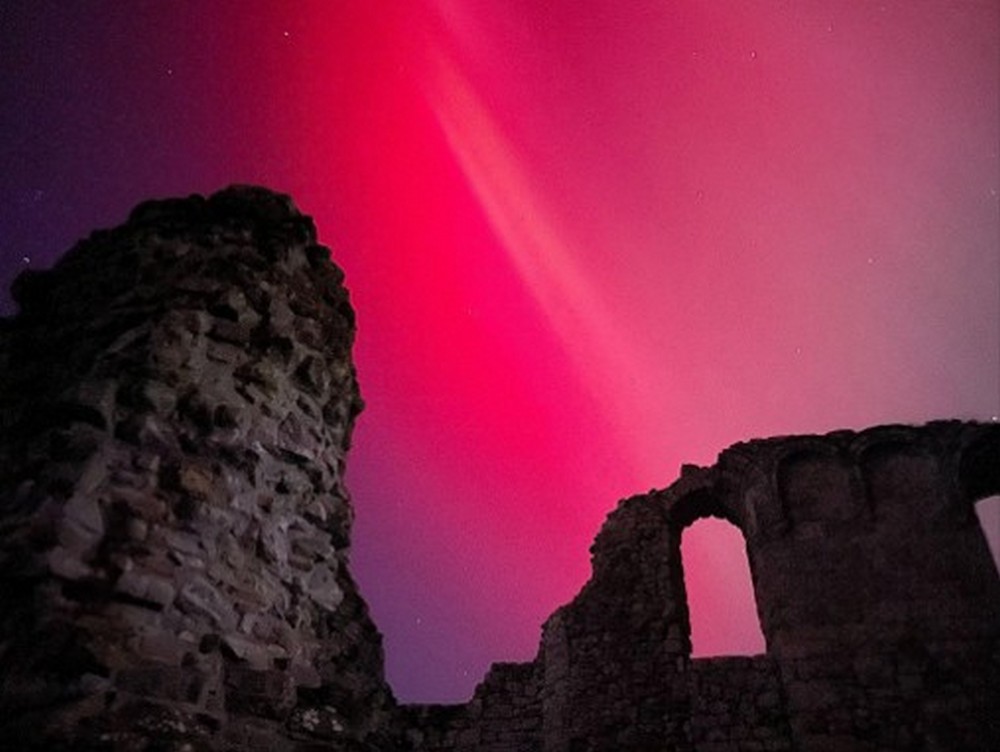
The stars they stole from you

Why Dark Skies Matter to Us All
by Ian Redfield

One night, a few weeks ago, my partner and I were having a ramble through town, and on a side street, we caught a bit of faint starlight. She was excited by what I found to be an altogether unimpressive sky, lamenting, “Ah, one day I hope to see the Milky Way.”
“What?” I replied, incredulous. “In twenty years, you’ve never seen our own galaxy?”
She shrugged quietly, and I immediately felt guilty for remarking in such a haughty tone. But in truth, it had not occurred to me that a clear, dark night was a privilege—something people could go their entire lives without. It seemed like a small tragedy, as if something wonderful had been robbed from her. I began asking friends of mine, hoping that they would reassure me with, “Yeah, of course I’ve seen
the Milky Way, everyone has,” but to my alarm, many of them didn’t. Before I could get too conceited about my “outdoorsiness”, I was humbled when I asked myself,
“Wait… when was the last time that I saw the Milky Way?”
So how did we surrender our starscapes? Why does it matter? And how can we get them back?
Ask most people, even those who should reasonably know better, about light pollution, and they won’t labor much in pretending to care; it is one of many (admittedly) forgettable siblings in a family with more fashionable ecological disasters. Truth be told, nothing is shocking about it—no turtles wrapped in plastic or pelicans bathed in oil, no “slap in the face”. Make no mistake, light emissions kill plenty of turtles, seabirds, and a host of others. No, it is that it feels indirect, silent, and so easy to unflinchingly dismiss as “one of those things,” which makes it pernicious. As a result, it is not a headline-breaking conversation, discussed the world over at dinner tables. But lately, science on the subject has overcome the initial inertia, and its evidence is no longer sparse or disputable. Hopeless as it may be to summarize such a giant genre of work, I hope to convey at least some of what I find so compelling about the push for dark skies.
Wildlife Woes
On a brief inventory, artificial lights attract some animals, deter others, disorienting most of the rest. In each instance, it bodes poorly. Those who are attracted (famously, insects and sea turtles) are drawn into precarious, often fatal circumstances. Those who avoid our lights (most mammals) are confined to meager fragments of habitat cordoned by roads, towns, and cities. Lastly, almost everything that migrates, be it a bird, plankton, or whale, is disoriented by lights that should not be there, leading them to places they should not be.
Estimates vary widely for the toll this exacts worldwide. But for a reference of scale, it is certain to have a hand in several billion bird deaths annually (through light-induced collisions and groundings), many trillions of insect deaths (being a herald of the “insect apocalypse”), billions of plants lost (through pollination failure), and enormous mammals, reptiles, and fish losses (which generally defy accurate estimation). The gist being, with every new publication, the numbers get longer and more frightening.
Sustainability
Though it may sound surprising, artificially igniting the atmosphere with trillions of watts of electricity every night is a costly endeavor. Almost a fifth of our total energy consumption goes into lighting, accounting for gigatons of CO2 emissions. This may be, at least slightly excusable, were it not for the fact that often this lighting is profoundly moronic in design and function. Waste defines our treatment of lighting, as we use the least efficient bulbs and produce the harshest wavelengths to illuminate things serving no immediate utility. A miserly, nature-hating industrialist would still see the economic sense of dimmer, warmer lights, at necessary times and places. Currently, even where necessary, something like a third of all outdoor lighting does not reach its intended area and instead sprays up into space, i.e., worldwide, preventable billions are spent annually on making the sky glow. I invite you, next time you are enjoying a walk at night, to stop and appreciate the senselessness of our lighting infrastructure.
Health & Happiness
There are many wonderful words, but Noctalgia, meaning “sky grief”, is a growing favorite of mine. It refers to the dread of losing dark nights and the sense of anxiety that comes with incessant blaring lights. This, like before, is often insidious, happening without your full awareness. But a mounting body of research has demonstrated that artificial light exposure is significantly tied to everything from anxiety/depression and suicidal ideation to cancer and a wide host of metabolic and sleep disorders. As regards safety, the terrible design of outdoor lighting often makes no effort to shield the eyes of pedestrians and drivers, with avoidable glare responsible for a more than considerable number of accidents each year, particularly among the elderly.
In Conclusion
“Great,” you must be thinking, “another thing trying to kill me and everything good in this world”, and you would be right. But there is a catch here where there isn’t in most environmental issues: light pollution is so easily solved that I am astonished that we haven’t done so already. All it takes is technology available decades ago, some electrical engineers, and the slightest political will. We pay the health of our minds, bodies, and environment for nothing, and to fix it would cost next to nothing. Better yet, like few of its kin, light pollution needs no remediation; its troubles are gone in the same moment we turn off the lights. Meaning, the antidote is attention, and luckily, more comes to the subject each minute. Dark sky communities slowly, yet steadily, have begun cropping up the world over, and I hold out much hope that our future is a dark one. Once exams pass, I hope to take my partner to the furthest, darkest field in Scotland. And weather permitting, stare up with her at the narrow band of white in which we live. No one deserves a sky without stars.