Mapping
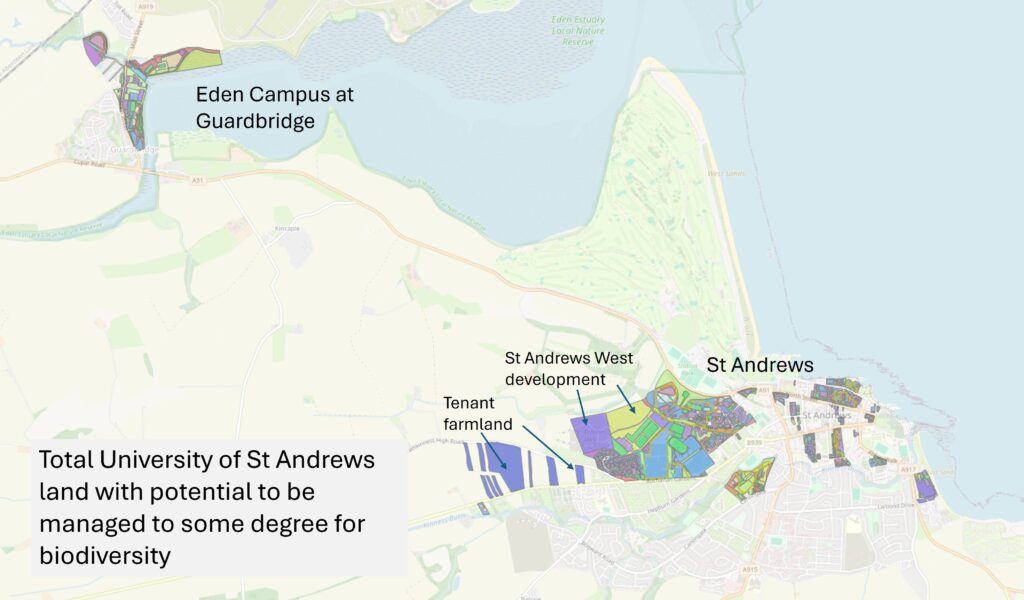
The main way we are monitoring biodiversity on University land is through mapping the locations of plants and animals found on the land within some key groups. These groups are both relatively easy for non-experts to identify, and that broadly provide an index of how many species there might be in other unmonitored groups. Current groups monitored are here.
The mapping approach is simple and reflects the bio-blitz approach. Students find a species, identify it and then map it. We then total up the number of species within the different groups overall, or in specific areas when we need to rank areas according to biodiversity value. We try to survey evenly across the University, but clusters of records and more species might well just reflect higher effort by a recorder, or their greater skill in identification. These types of biases will even out over time as more and more people and records are involved, or we can use statistical random resampling to create measures that can be realistically compared across areas. Keeping our methodology simple is very important, so that anyone can get involved and be a useful part of the process and so become transformed by the biodiversity we have in St Andrews, leading to biodiversity positive behaviour here and beyond.